
Understanding Harley-Davidson Model Codes
Harley-Davidson model codes, a unique system of letters and numbers, identify each motorcycle, offering enthusiasts and mechanics crucial details about a specific bike’s configuration.
Harley-Davidson motorcycles, steeped in American tradition, possess a unique identification system crucial for owners, mechanics, and enthusiasts alike. This system comprises two key components: the Vehicle Identification Number (VIN) and the Model Code. The VIN, a 17-character alphanumeric sequence, provides a comprehensive history of the motorcycle, including its manufacturer, year of production, and assembly plant.
However, the Model Code offers a more granular level of detail, pinpointing the specific configuration of the bike – its family, sub-family, and exact model. Understanding these codes unlocks a wealth of information, from factory specifications to original equipment details. Whether you’re researching a potential purchase, restoring a classic, or simply curious about your own ride, deciphering these codes is essential for any Harley-Davidson aficionado.
The Importance of Harley-Davidson Model Codes
Harley-Davidson model codes are far more than just alphanumeric designations; they are vital keys to understanding a motorcycle’s identity and specifications. For prospective buyers, these codes reveal crucial details about a bike’s features, ensuring it aligns with their desired riding experience. Mechanics rely on them for accurate parts identification and service procedures, guaranteeing proper repairs and maintenance.
Furthermore, enthusiasts and restorers utilize model codes to verify originality and authenticity, preserving the legacy of these iconic machines. Knowing the code allows for precise sourcing of period-correct components, maintaining historical accuracy; Ultimately, mastering Harley-Davidson model codes empowers owners to fully appreciate and care for their investment, fostering a deeper connection with their motorcycle’s heritage.
Decoding the Harley-Davidson VIN
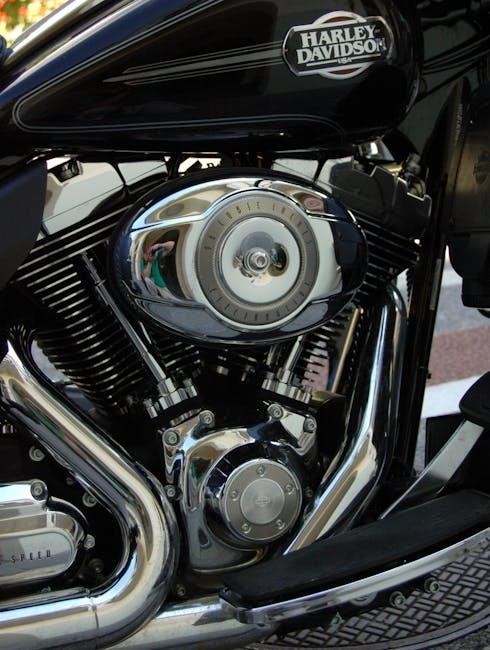
Harley-Davidson’s Vehicle Identification Number (VIN) is a unique 17-character code providing a comprehensive history of the motorcycle, from its origin to specifications.
VIN Structure: 17-Character Breakdown
The Harley-Davidson VIN, comprised of seventeen characters, isn’t just a random sequence; it’s a meticulously structured code revealing significant details about the motorcycle. The first three characters constitute the World Manufacturer Identifier (WMI), pinpointing Harley-Davidson as the manufacturer and the country of origin. Following this, the next five characters form the Vehicle Descriptor Section (VDS), detailing crucial aspects like the motorcycle’s type, engine size, and specific model characteristics.
The subsequent characters delve into more specific details, including production sequence numbers and model year information. The tenth character specifically indicates the model year, a key piece of information for determining the bike’s age. The final eight characters are the vehicle’s serial number, uniquely identifying that particular motorcycle. Understanding this breakdown allows enthusiasts and professionals to decipher a bike’s history and specifications with precision, making the VIN an invaluable tool for identification and verification.
World Manufacturer Identifier (WMI)
The World Manufacturer Identifier, the initial three characters of the Harley-Davidson VIN, serves as a globally recognized code identifying the manufacturer. For Harley-Davidson, this WMI definitively establishes the company as the vehicle’s originator and simultaneously indicates its country of manufacture – the United States of America. This standardized system, overseen by the Society of Automotive Engineers (SAE), ensures consistent identification across all vehicle manufacturers worldwide.
The WMI isn’t merely a label; it’s a crucial element in tracking vehicle production and ensuring regulatory compliance. It allows authorities and industry professionals to quickly and accurately pinpoint the manufacturer, facilitating recalls, safety investigations, and accurate vehicle registration. This foundational component of the VIN sets the stage for decoding the remaining characters, providing a clear starting point for understanding the motorcycle’s complete history and specifications.
Vehicle Descriptor Section (VDS)
Following the World Manufacturer Identifier, the Vehicle Descriptor Section (VDS) – characters four through nine of the Harley-Davidson VIN – provides detailed information about the motorcycle itself. This section meticulously outlines key characteristics, including the motorcycle’s type, engine size, model, and body style. It’s a granular breakdown of the vehicle’s core attributes, differentiating it from other models produced by Harley-Davidson.
The VDS isn’t a random assortment of characters; each digit and letter holds specific meaning, adhering to Harley-Davidson’s internal coding system. Decoding this section requires referencing official Harley-Davidson documentation or utilizing a reliable VIN decoder. Understanding the VDS is paramount for identifying specific features, confirming factory specifications, and assessing the motorcycle’s overall configuration, offering a comprehensive snapshot of its build.
Harley-Davidson Model Code System
Harley-Davidson’s model code system employs a combination of letters and numbers, strategically placed, to pinpoint a motorcycle’s exact features and specifications.
Model Code Location and Identification
Locating the Harley-Davidson model code is a straightforward process, typically found stamped or affixed on the motorcycle’s steering head, visible when the handlebars are turned fully to the left. This code isn’t the full 17-digit Vehicle Identification Number (VIN), but a shorter, more focused sequence. Often, it’s presented on a sticker or directly etched into the metal of the frame.
Identifying the code requires careful observation; it’s usually a series of letters followed by numbers. Experienced Harley enthusiasts quickly learn to recognize these codes, understanding they represent a specific combination of engine size, model features, and production year details. The code provides a quick reference point, bypassing the need to decode the entire VIN for basic model information. Knowing where to find it and what it represents is key for owners, mechanics, and anyone involved in the Harley-Davidson world.
First Character: Motorcycle Family
The initial character within a Harley-Davidson model code serves as a primary identifier, denoting the overarching motorcycle family to which the bike belongs. This single letter immediately categorizes the machine, providing a broad understanding of its design and intended purpose. For instance, a code beginning with “F” typically indicates a Touring model, built for long-distance comfort and carrying capacity.
Conversely, “X” designates a Sportster, known for its agility and nimble handling. “F” also covers models like the FL, signifying larger touring bikes. Understanding this first character is crucial, as it sets the stage for interpreting the subsequent digits and letters within the code. It’s the foundational piece of information, quickly revealing whether you’re dealing with a touring machine, a sporty roadster, or another distinct Harley-Davidson family.
Second Character: Model Sub-Family
Following the initial motorcycle family identifier, the second character in a Harley-Davidson model code refines the categorization, pinpointing the specific sub-family within that broader group. This character provides a more detailed understanding of the motorcycle’s characteristics and intended riding experience. For example, within the Touring family (“F”), an “L” often denotes a traditional, full-dressed touring bike, like the classic FLH.
Alternatively, an “X” within the “F” family might indicate a more performance-oriented touring model, such as the Street Glide. Similarly, within the Sportster family (“X”), different letters signify variations in engine size, styling, and features. Deciphering this second character narrows down the possibilities, offering a clearer picture of the motorcycle’s specific design and capabilities, building upon the foundation laid by the first character.
Third & Fourth Characters: Specific Model
The third and fourth characters within a Harley-Davidson model code are where the true specificity lies, identifying the exact model of the motorcycle. These characters move beyond family and sub-family classifications, detailing the precise configuration and features of a particular bike. Combinations like “XS” or “BS” aren’t arbitrary; they represent unique models within the broader Harley-Davidson lineup.
For instance, a specific combination might denote a particular engine displacement, styling package, or feature set. Understanding these final two characters requires referencing Harley-Davidson’s model code charts or utilizing a VIN decoder. They are crucial for accurately identifying a motorcycle, differentiating between similar models, and accessing the correct parts or service information. These characters complete the puzzle, providing a definitive model designation.
Common Harley-Davidson Model Code Prefixes
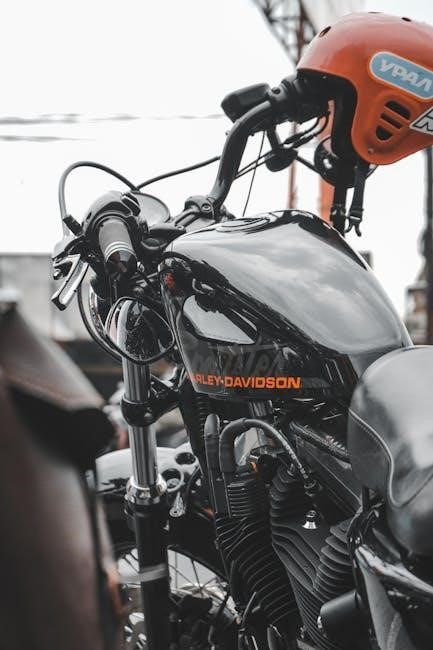
Harley-Davidson employs prefixes like FL, FX, and XL to categorize motorcycles, indicating broad model families—Touring, Softail, and Sportster, respectively.

FL – Touring Models
FL designates Harley-Davidson’s renowned touring motorcycles, built for long-distance comfort and carrying capacity. These models, historically featuring the Electra Glide name, prioritize rider and passenger experience over shorter jaunts. The ‘FL’ prefix consistently indicates a full-dress touring machine, often equipped with a large fairing, windshield, and substantial saddlebags.
Within the FL family, variations denote specific features and engine sizes. For example, FLH signifies a standard Electra Glide, while FLHX represents the Street Glide, known for its streamlined appearance and powerful engine. FLHTK denotes the Electra Glide Ultra Limited, boasting premium amenities and extensive storage. Understanding these nuances within the ‘FL’ designation is key to identifying the precise touring model and its intended purpose, offering riders a tailored experience for cross-country adventures.
FX – Softail Models
FX identifies Harley-Davidson’s Softail family, celebrated for their classic styling and comfortable ride. Unlike touring models, Softails generally prioritize a more stripped-down aesthetic and agile handling, though variations exist. The ‘FX’ designation historically signified models with a hidden rear suspension, mimicking the look of a hardtail motorcycle while providing improved comfort.
Within the FX range, numerous sub-models cater to diverse rider preferences. The FXBB Street Bob offers a minimalist design, while the FXFBS Fat Bob boasts a bolder, more aggressive stance. The FXL Low Rider combines classic lines with modern performance. Decoding the specific suffix following ‘FX’ reveals details about the bike’s features, engine size, and overall character, allowing enthusiasts to pinpoint their ideal Softail configuration for cruising or customization.
XL – Sportster Models
XL designates Harley-Davidson’s Sportster line, historically known for being the entry point into the Harley-Davidson family and celebrated for their nimble handling and customizable nature. These models typically feature smaller displacement engines compared to touring or Softail bikes, making them appealing to a wider range of riders. The ‘XL’ prefix has been a mainstay in the Harley-Davidson lineup for decades, evolving alongside rider preferences and technological advancements.
Sportster models, like the XL1200NS Iron 1200, offer a blend of classic Harley styling and modern performance. They are popular choices for both new riders and experienced enthusiasts seeking a lightweight, responsive motorcycle. The suffix following ‘XL’ provides crucial information about the specific model, engine size, and features, aiding in identification and understanding the bike’s intended purpose.
FV – Fat Boy Models
FV specifically identifies Harley-Davidson’s Fat Boy models, instantly recognizable for their substantial presence and bold styling. These bikes are characterized by their solid disc cast aluminum wheels, massive tires, and a generally imposing aesthetic. The Fat Boy represents a cruiser archetype, embodying a powerful and confident riding experience. Historically, the Fat Boy has been a flagship model, showcasing Harley-Davidson’s design capabilities and engineering prowess.
The ‘FV’ prefix consistently denotes a focus on a heavier, more visually striking motorcycle. Variations within the Fat Boy line, indicated by subsequent characters in the model code, offer different engine sizes and feature packages. The Fat Boy 117 (FXFBS) is a prime example, showcasing a larger displacement engine and modern enhancements while retaining the iconic Fat Boy look.
Decoding Year of Manufacture
Determining a Harley-Davidson’s production year relies heavily on the 10th character within the 17-digit Vehicle Identification Number (VIN) sequence.
10th Character of the VIN: Model Year
The tenth character in a Harley-Davidson’s VIN is specifically designated to indicate the model year of the motorcycle. However, it’s crucial to understand that this character doesn’t directly represent the calendar year. Instead, Harley-Davidson utilizes a coded system where each letter corresponds to a specific production year. This system requires referencing a dedicated chart or decoder to translate the letter into the actual year the motorcycle was manufactured.
For instance, a “B” might signify 2008, while a “C” could represent 2009, and so on. This coding method allows Harley-Davidson to maintain a consistent system across different production facilities and model lines. It’s important to note that this character only provides the model year, not necessarily the date of sale or first registration. Therefore, understanding this system is vital for accurately dating a Harley-Davidson based on its VIN.
Using the 10th Digit to Determine Production Year
Determining a Harley-Davidson’s production year using the 10th VIN digit requires a specific decoding chart. This chart correlates each letter assigned to that position with a corresponding calendar year. It’s not a straightforward alphabetical sequence; Harley-Davidson employs a non-sequential coding system to prevent easy manipulation or misrepresentation of a motorcycle’s age.
Several online resources and Harley-Davidson service manuals provide these decoding charts. By cross-referencing the letter found in the 10th position of the VIN with the chart, you can accurately ascertain the model year. Remember, this indicates the year the motorcycle was manufactured, which may differ from its sale date. Accurate decoding is essential for valuation, parts compatibility, and historical research, making this a crucial step in understanding a Harley-Davidson’s history.

Specific Model Code Examples
Model codes like FLHXS (Street Glide Special), FXFBS (Fat Bob 117), and XL1200NS (Sportster Iron 1200) clearly demonstrate Harley-Davidson’s systematic naming conventions.
FLHXS – Street Glide Special
Decoding the FLHXS model code reveals a wealth of information about the Street Glide Special. The “FL” prefix immediately identifies this motorcycle as belonging to the Touring family, known for its comfort and long-distance capabilities. The “H” signifies a standard or full dresser configuration, indicating features like a fairing and saddlebags. “X” denotes the Special trim level, suggesting upgraded components and styling compared to the base model. Finally, “S” points to specific enhancements, often including premium paint schemes and advanced features.
Essentially, the FLHXS Street Glide Special represents a top-tier touring motorcycle equipped with a powerful engine, advanced infotainment systems, and luxurious comfort features designed for extended rides. Understanding this code allows enthusiasts to quickly grasp the core characteristics of this popular Harley-Davidson model.
FXFBS – Fat Bob 117
The FXFBS model code pinpoints the Fat Bob 117, a standout within Harley-Davidson’s Softail lineup. “FX” clearly designates this bike as a member of the Softail family, celebrated for its hidden rear suspension and classic styling. The “F” further specifies a Fat Bob model, known for its aggressive stance and distinctive dual headlight configuration. “B” reinforces the Bobber aesthetic, emphasizing a stripped-down, minimalist design. Crucially, “S” indicates the inclusion of the Milwaukee-Eight 117 cubic inch engine, delivering substantial power and torque.
Therefore, FXFBS translates to a powerful, modern Softail Bobber equipped with Harley-Davidson’s largest engine option, offering a thrilling riding experience and bold visual presence. Decoding this code provides instant insight into the bike’s core identity.
XL1200NS – Sportster Iron 1200
The XL1200NS code identifies the Sportster Iron 1200, a popular choice for riders seeking a nimble and stylish motorcycle. “XL” immediately signifies this model belongs to the Sportster family, renowned for its lightweight design and accessible handling. The “1200” denotes the engine displacement – a 1200cc Evolution engine, providing ample power for both city riding and highway cruising. “N” specifies a standard configuration, while “S” confirms it’s a Sportster model.
Consequently, XL1200NS represents a classic Sportster Iron, equipped with a potent 1200cc engine and a minimalist, dark aesthetic. Understanding this code allows quick identification of the bike’s key features and performance characteristics, appealing to both new and experienced riders.

Resources for Harley-Davidson Model Code Information
Numerous online VIN decoders, owner’s manuals, and service manuals provide comprehensive Harley-Davidson model code details for enthusiasts and professionals alike.
Online VIN Decoders
Several websites specialize in decoding Harley-Davidson Vehicle Identification Numbers (VINs), transforming the 17-character code into understandable information. These decoders are incredibly useful for prospective buyers, current owners, and anyone curious about a specific motorcycle’s history and specifications. They typically reveal the year of manufacture, model, original equipment, and sometimes even recall information.
Popular options include dedicated Harley-Davidson VIN decoder sites, as well as more general VIN lookup tools that encompass various motorcycle brands. While most are free to use, some may offer premium features for a fee, such as detailed vehicle history reports. It’s important to verify the accuracy of the information provided by cross-referencing with other sources, like the owner’s manual or a Harley-Davidson dealership.
Remember that VIN decoders provide a snapshot of the bike’s original configuration, but modifications made by previous owners won’t be reflected in the decoded data.
Harley-Davidson Owner’s Manuals
The official Harley-Davidson owner’s manual is an invaluable resource for understanding your specific motorcycle, including its model code and associated features. These manuals often contain a dedicated section explaining the VIN structure and how to interpret the model code. They provide a direct link between the alphanumeric sequence and the bike’s original factory specifications.
Beyond the VIN decoding, owner’s manuals detail maintenance schedules, operating instructions, and safety precautions specific to your model. Many older manuals are available online as PDFs, offering convenient access to information even if the original physical copy is lost. Harley-Davidson also provides digital versions for newer models.
Consulting the owner’s manual ensures you have the most accurate and reliable information about your motorcycle, complementing the data obtained from online VIN decoders.
Harley-Davidson Service Manuals
For a deeper dive into the intricacies of a Harley-Davidson motorcycle, the service manual is essential. While owner’s manuals offer basic information, service manuals provide detailed breakdowns of components, repair procedures, and wiring diagrams. They frequently reference the model code to specify parts compatibility and correct service protocols.
These manuals often include comprehensive VIN decoding sections, explaining how the model code relates to specific engine configurations, transmission types, and factory-installed options. Accessing a service manual, often available as a PDF download, is crucial for accurate maintenance and repairs.
Understanding the model code within the service manual context allows technicians and experienced owners to identify the exact specifications of the motorcycle, ensuring the correct parts and procedures are used.